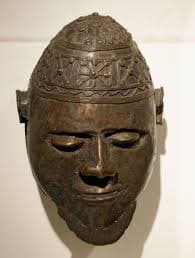
Yoruba is spoken by over 45 million people across Nigeria, Benin, Togo, and the diaspora. It is a tonal language — meaning the same word, said at different pitches, means completely different things. That is the challenge. That is also what makes it alive. Our teachers grew up speaking Yoruba in their homes, their markets, their churches. They don't just correct your grammar — they tell you when you sound authentic.
Programme levels
Find your starting point
Beginner
You have never spoken Yoruba or understand very little. We start from the alphabet, tones, and basic greetings.
Intermediate
You can understand simple sentences but struggle to respond confidently. We build your conversational muscle.
Advanced
You can hold conversations but want to sound natural — proverbs, idioms, regional nuance, and formal register.
The curriculum
What you will learn
More than words
Yoruba is not just a language — it is a philosophical system. The concept of Ọmọlúàbí — the idea of a morally upright, well-raised person — is untranslatable. When you learn Yoruba properly, you start to understand why. Our teachers weave this identity into every lesson, not as a lecture, but as the context in which real language lives.
What's included
Every tool you need to become fluent
Student voices
What our learners say
My grandmother cried when I called her and spoke to her in Yoruba for the first time. I had tried apps for years. This was different.
I thought I knew Yoruba but I realised I only knew a few phrases. In three months I went from nodding along to actually arguing in it.
Common questions
Everything you need to know
Your journey starts with one class.
Join Yoruba students already reconnecting with their language, their culture, and themselves.